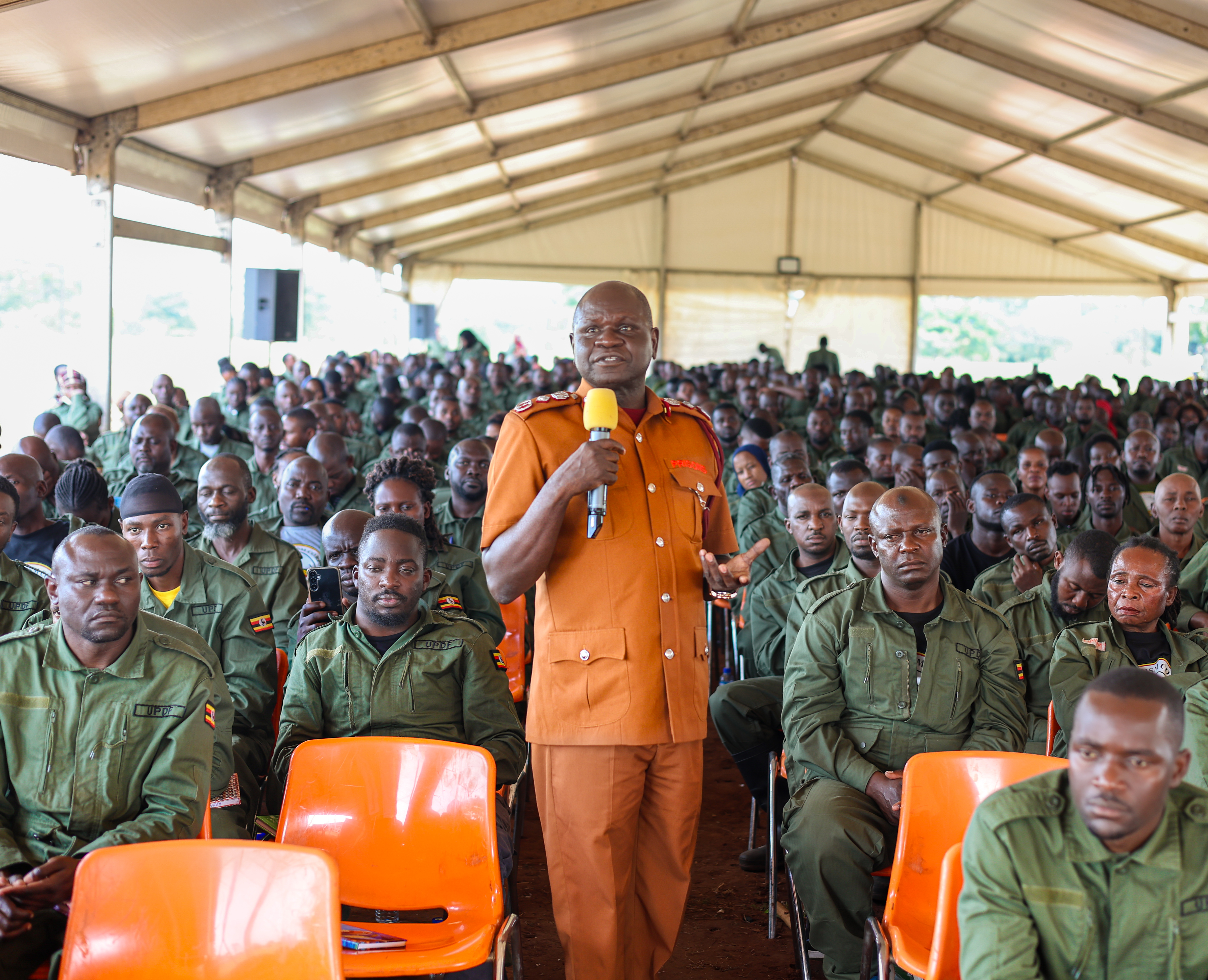
The Deputy Commissioner General of Prisons, Mr. Samuel Akena, has highlighted the Uganda Prisons Service's growing contribution to Uganda’s socio-economic transformation while addressing 1,030 Ugandan returnees from South Africa undergoing patriotism training at the National Leadership Institute (NALI) in Kyankwanzi District.
Mr. Akena said that beyond its core mandate of safe custody and rehabilitation of offenders, the Service plays an important role in national development through commercial agriculture, seed multiplication, cotton production, furniture manufacturing and vocational skills training. He noted that UPS operates large farms across the country, produces quality maize, sunflower and soybean seeds and supplies furniture to government institutions under the Buy Uganda Build Uganda policy.
He explained that rehabilitation programs have transformed thousands of inmates into productive citizens through vocational training in trades such as carpentry, tailoring, welding and metal fabrication, while many more are pursuing formal education. He noted that these programs have contributed to reducing re-offending and supporting national wealth creation.
Mr. Akena further revealed that the Uganda Prisons Service has distributed over 12 million kilograms of quality maize seed to farmers and government programmes, helping to address the challenge of adulterated seeds while improving agricultural productivity and food security. He added that the Service is expanding its involvement in the cotton value chain through the takeover of already established ginning facility in Pajule, Pader District.
He encouraged the returnees to take advantage of government programs such as the Parish Development Model (PDM), Emyooga and the Women Entrepreneurship Fund to improve their livelihoods. He also urged them to embrace modern farming methods, entrepreneurship and skills development as pathways to economic success.
Mr. Akena assured the returnees that Uganda remains peaceful, stable and full of opportunities for all citizens willing to work hard. He called upon them to put behind the challenges they experienced abroad, remain law-abiding and actively contribute to the socio-economic transformation of their communities and the nation at large.
Currently, more than 16,000 inmates are undergoing vocational skills training in various disciplines, while 3,491 inmates are enrolled in formal education programs at primary, secondary and diploma levels.
These rehabilitation programs have contributed to reducing re-offending, with the recidivism rate currently standing at 13.2 percent.
The Deputy Commissioner General explained that rehabilitation not only transforms offenders into productive citizens but also contributes directly to poverty reduction, community safety and national development.
He noted that the Uganda Prisons Service has also invested in infrastructure development, including the construction of staff housing and grain storage facilities. The maize silos at Lugore and Ruimi Prison Farms have strengthened grain storage capacity, reduced post-harvest losses and improved food security.