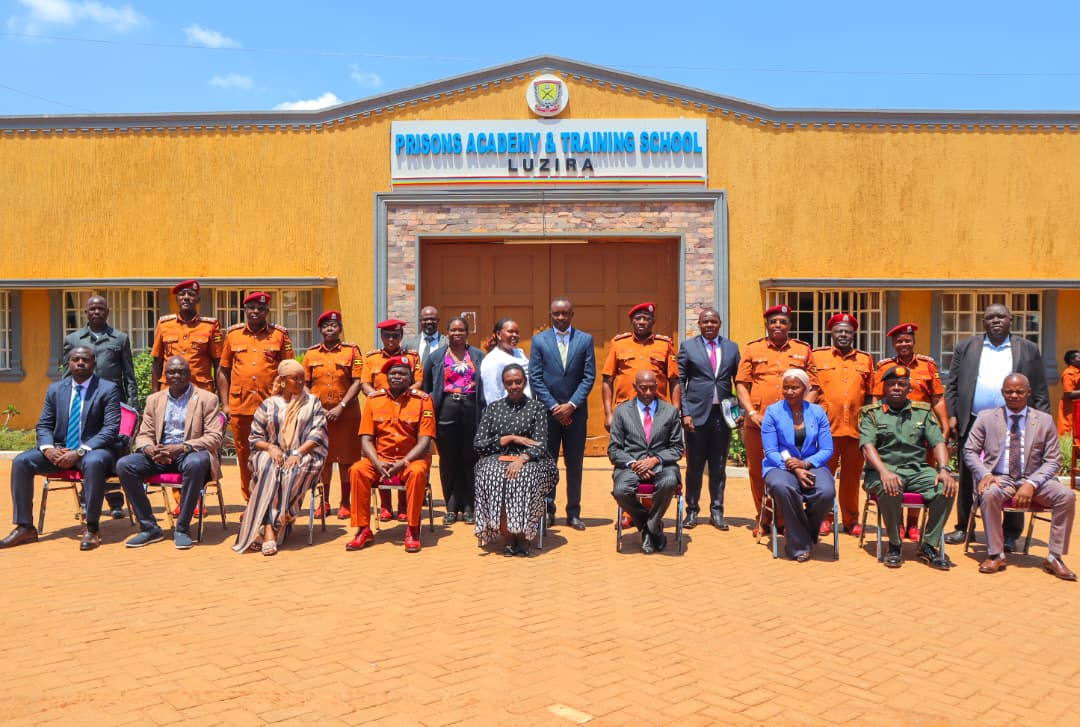
KAMPALA | September 1, 2026: The Parliamentary Committee on Defense and Internal Affairs, led by Hon. Robina Rwakoojo, has inspected Luzira Prison Industries and the Prisons Academy and Training School as part of its oversight visit to the Uganda Prisons Service (UPS).
The Committee, together with UPS top management led by Deputy Commissioner General of Prisons Mr. Samuel Akena, toured the production and training facilities.
UPS operates 68 prison farms and 11 industrial workshops. The farms support seed multiplication, crop production and livestock development, while the industries produce furniture, uniforms, fabrics, soap and crafts.
Hon. Rwakoojo said the Service had responded to President Yoweri Kaguta Museveni’s guidance to strengthen prison industries, produce furniture for government institutions, reduce the cost of maintaining prisoners and generate revenue.
Mr. Akena said UPS has developed production capacity worth about Shs4.076 billion annually. However, limited production systems and personnel remain a challenge in meeting demand from all government institutions.
To address this, Government has approved the Fully Integrated Prisons Industries Project, estimated at Shs 565.045 billion. The project will include leather and shoe-making facilities, an integrated furniture plant, a textile factory, a garment production unit and a spinning mill at Bugungu and Kitalya.
The Committee was also briefed on staff shortages. UPS currently has 83,682 prisoners against an approved staff structure of 39,462, with only 37.4 per cent of the structure filled. The staff-to-prisoner ratio is about 1:7, compared to the recommended 1:3.
The Prisons Academy and Training School conducts command, non-commissioned officers and specialized refresher courses. However, the facility, built in 1907 for 550 trainees, is now operating beyond its original capacity.
UPS plans to establish a modern training school at Kitalya and renovate the Luzira facility to expand training capacity.
The Committee was further briefed that prison congestion remains a major challenge. The approved holding capacity is 23,437 inmates, compared to the current population of 83,682, leaving an excess of 60,245 inmates.
The oversight visit continues on Wednesday at the Kitalya Group of Prisons, where the Committee will inspect sites for the proposed integrated furniture plant, textile and garment facilities and the modern training school.